
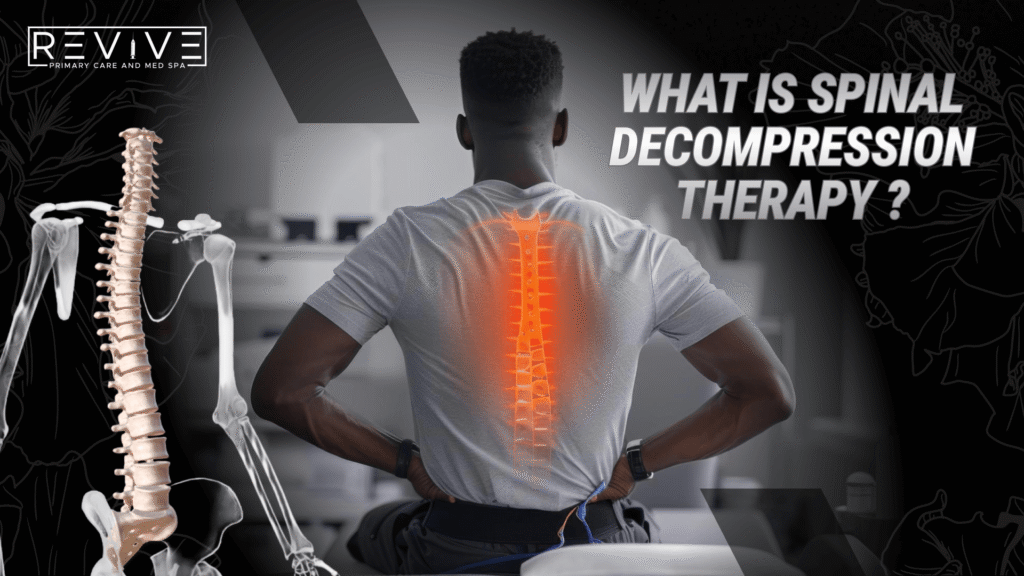
Chronic pain has a way of slowly taking over daily life. Lower back pain that never fully resolves, recurring migraines, or ongoing muscle spasms are often signs of deeper issues, frequently related to spinal tension or disc compression that builds over time.
If you are looking to avoid surgery, spinal decompression therapy is one non-invasive option to discuss with your provider.

Why Chronic Pain Often Comes From the Spine
The spine plays a central role in how the body moves, feels, and functions. Over time, poor posture, injuries, repetitive strain, or disc issues can place pressure on spinal discs and nearby nerves.
This pressure may contribute to:
- Chronic lower back pain
- Neck tension and stiffness
- Recurring migraines or headaches
- Muscle spasms
- Pain that worsens with sitting or activity
Finding the source of that pressure comes first, which is why every plan starts with an evaluation.
What Is Spinal Decompression Therapy?
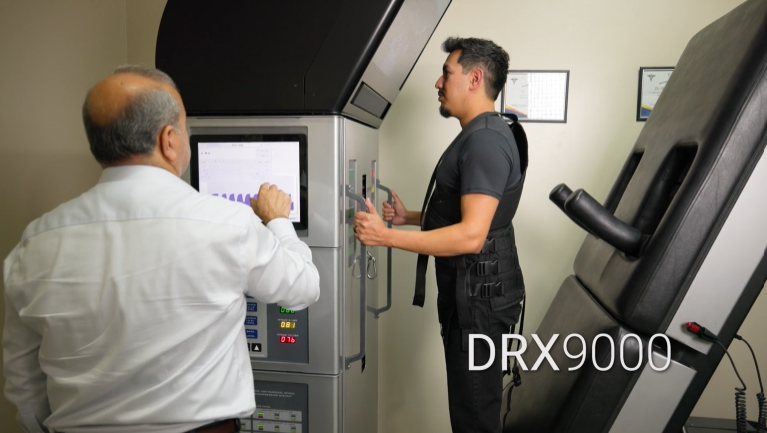
Spinal decompression therapy is a non-surgical treatment designed to gently relieve pressure on the spine. At Revive, this therapy is performed using the DRX9000 system, a medical-grade decompression machine.
The DRX9000 works by:
- Gently stretching and releasing the spine
- Reducing pressure between spinal discs
- Relieving tension on surrounding nerves
What Treatment Feels Like
Spinal decompression sessions are simple and comfortable. Each session typically lasts 20 to 30 minutes and is performed several times a week over a series of treatments.
Patients often describe the experience as gentle and relaxing, with no downtime required afterward.
Before starting, every patient receives a thorough evaluation to ensure spinal decompression is the right fit for their condition and goals.
Who May Benefit From Spinal Decompression
This therapy may be helpful for patients experiencing:
- Chronic lower back pain
- Disc-related issues
- Ongoing muscle spasms
- Pain that has not improved with conservative care
Not every type of pain is appropriate for decompression, which is why proper evaluation is essential.
Available Exclusively in McKinney
Spinal decompression therapy with the DRX9000 is currently available only at the McKinney location.
At Revive Primary Care & Med Spa, your provider builds a personalized care plan around your evaluation and your goals.
To get started, book an evaluation and choose the McKinney clinic.
Take the Next Step Toward Relief
Back pain that keeps coming back deserves a closer look.
An evaluation at our McKinney clinic can tell you whether spinal decompression is worth trying. Book online and choose the McKinney clinic, or call a clinic if you have questions first.
Our comprehensive Primary Care services focus on Acute Illness Care Services, IV Hydration Therapy, and Fibroscan to help you maintain long-term health.
To learn more about related care at Revive, explore our in-office minor procedures, routine checkups and physical exams, and telemedicine visits.
Related reading: one patient’s non-invasive recovery after a car accident.
Frequently Asked Questions
Does spinal decompression therapy work?
Results vary, and spinal decompression does not help everyone. Cleveland Clinic lists traction, which uses a traction table to stretch the spine, among the nonsurgical options for back pain, but also notes that alternative therapies may not work. An evaluation can show whether your type of pain is a reasonable fit before you start.
Is spinal decompression the same as back surgery?
No. Spinal decompression is a name for several treatments that take pressure off the spine, and only some are surgical. Cleveland Clinic describes nonsurgical options such as traction and physical therapy, and surgical ones such as diskectomy and laminectomy, which providers may recommend when other therapies do not help. The DRX9000 therapy described in this article does not involve surgery.
Can neck problems cause headaches that feel like migraines?
Yes. A cervicogenic headache is head pain caused by a problem in the neck, such as arthritis, a pinched nerve or a slipped disk. Cleveland Clinic explains that, like a migraine, it can cause pain on one side of the head, but without the light sensitivity, nausea or vomiting common with migraine. Treatment options include physical therapy and medication, with surgery as a last resort.
Can spinal decompression help migraines?
Spinal decompression is not among the migraine treatments that MedlinePlus describes. It explains that most experts believe a migraine attack begins in the brain and involves nerve pathways and chemicals, with triggers such as poor sleep, stress, skipped meals and caffeine withdrawal. If headaches are your main concern, ask a primary care provider to look at your symptoms and triggers first.
What are nonsurgical treatments for chronic back pain?
Common nonsurgical options include medications, physical therapy and hot or cold packs. NIAMS also lists complementary approaches such as spinal manipulation and acupuncture, which may relieve pain for some people. It advises avoiding bed rest and slowly increasing activity as you can tolerate it. Surgery may be suggested if all the other treatments you have tried have not relieved your pain.
When is back pain considered chronic?
Back pain is considered chronic when it lasts longer than 12 weeks and occurs daily. NIAMS describes acute back pain as pain that comes on suddenly and lasts a few days to a few weeks, while subacute pain lasts 4 to 12 weeks. See a doctor if your pain does not improve after a few weeks.
Do I need an MRI for back pain?
Usually not. NIAMS notes that most people with back pain do not need additional testing. In some cases, a doctor may order an MRI to look at soft tissues such as the discs, ligaments and nerve roots, or other imaging to check for fractures and problems with spinal alignment.
Still have questions?
Call your clinic and our team will help you find the right visit.
This article is for general informational purposes only and is not medical advice. It does not create a patient-provider relationship. Individual results and health needs vary, so please consult a qualified clinician about your own symptoms, diagnosis, or treatment options.