

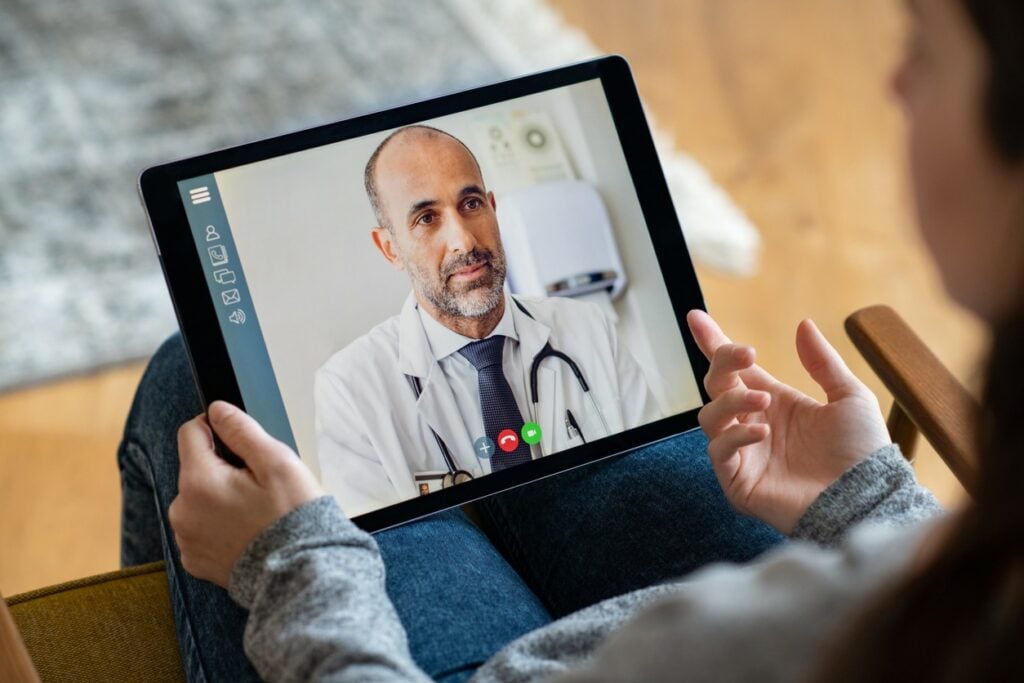
Life rarely slows down for appointments. Between work, travel, family, and packed schedules, making it into the clinic is not always easy. That is exactly why telemedicine exists: to help keep your care consistent, accessible, and uninterrupted.
At Revive Primary Care & Med Spa, virtual visits are designed to meet you where you are.

What Telemedicine Actually Is
Telemedicine is a secure, HIPAA-compliant virtual visit with a licensed medical provider. Using video calls, patients can connect from home, work, or even while traveling, without a waiting room, commute, or unnecessary delays.
You still see your provider face to face, just without the hassle.
When Virtual Visits Make the Most Sense
Telemedicine works best for many common and ongoing care needs, including:
- Lab result reviews and follow-ups
- Prescription refills
- Medication check-ins
- Progress reviews for weight loss or hormone therapy
- Non-urgent symptoms
- General wellness check-ins
For these situations, virtual care can often help keep treatment moving forward.
Why Patients Choose Virtual Care
Telemedicine is designed for real life. Patients value virtual visits because they offer:
- No drive time or waiting rooms
- Flexible scheduling for busy weeks
- Continued care during travel
- Privacy and convenience
- Direct access to their provider
Care can stay consistent, even when schedules change.
Private, Simple, and Secure
Virtual visits at Revive are HIPAA compliant and designed to be easy to use. Appointments are efficient, focused, and personalized, just like in-office visits.
If something requires hands-on evaluation, your provider will guide you into the clinic. The goal is always the right care, in the right setting.
When In-Person Care Is the Better Option
While telemedicine covers many needs, some situations are best handled in person, including:
- Emergency symptoms
- New or severe pain or injury
- Concerns requiring a physical exam or minor procedure
Your provider will recommend in-person care when it is the most appropriate option.
Care That Moves With You
Telemedicine can help keep care flexible while keeping a personal connection. It can help patients stay consistent with their health plan, even when life gets busy.
Ask about a virtual visit to continue your care when a trip to the clinic does not fit your schedule. You can find every Revive clinic and its hours on our locations page.
To learn more about related care at Revive, explore our medication management support, annual physical exams, and concierge-style membership options.
Related reading: how concierge-style clinics approach chronic care and where to go for minor injuries instead of the ER.
Frequently Asked Questions
What is the difference between telehealth and telemedicine?
Telehealth is the broader term, and telemedicine is one part of it. Cleveland Clinic describes telehealth as an umbrella term for the use of digital technologies, while telemedicine uses those technologies to connect patients with providers in a virtual setting. MedlinePlus notes that people sometimes use the two words to mean the same thing.
Does insurance cover telemedicine visits?
It depends on your plan. MedlinePlus explains that not all health insurance companies pay for all telehealth services, and that services may be limited for people on Medicare or Medicaid. Before a virtual visit, check with your insurance company to confirm that the telehealth services you need will be covered.
Can a doctor prescribe medication through telemedicine?
Yes, in many cases. Cleveland Clinic notes that after a virtual visit your provider can send prescriptions to a pharmacy of your choice, but some medications may require an in person visit before you can get a prescription. MedlinePlus adds that secure messaging through a patient portal can be used to ask for prescription refills.
What conditions can be treated with telemedicine?
Many routine and ongoing health needs can be handled virtually. MedlinePlus lists wellness visits, prescriptions, skin conditions, nutrition counseling, mental health counseling, and urgent care for problems like sinusitis, urinary tract infections, and common rashes. Cleveland Clinic adds that providers can consult on common chronic conditions treated in primary care, such as arthritis and diabetes.
How do I prepare for a telemedicine appointment?
Test your equipment and log in early. Cleveland Clinic recommends checking that your webcam and microphone work, confirming your login information, and downloading any video software or app ahead of time. Sign on 10 to 15 minutes early and stay logged on until your provider arrives. For the best experience, plan to turn on video during the visit.
Is a telemedicine visit private and secure?
Telehealth visits are designed to protect your health information. MedlinePlus explains that with telehealth your health information remains private, and that providers must use computer software that keeps your health records safe. You can protect your privacy too: Cleveland Clinic suggests having guests or family members wait in another room until the visit is over.
When should you not use telemedicine?
Do not use a virtual visit for an emergency. Cleveland Clinic states that telemedicine should never be used in emergency situations, and that symptoms such as chest pain, shortness of breath, or acute abdominal or flank pain are best evaluated in person. For chest pain, shortness of breath, or a possible heart attack or stroke, call emergency services or get in person care right away.
Still have questions?
Call your clinic and our team will help you find the right visit.
This article is for general informational purposes only and is not medical advice. It does not create a patient-provider relationship. Individual results and health needs vary, so please consult a qualified clinician about your own symptoms, diagnosis, or treatment options.