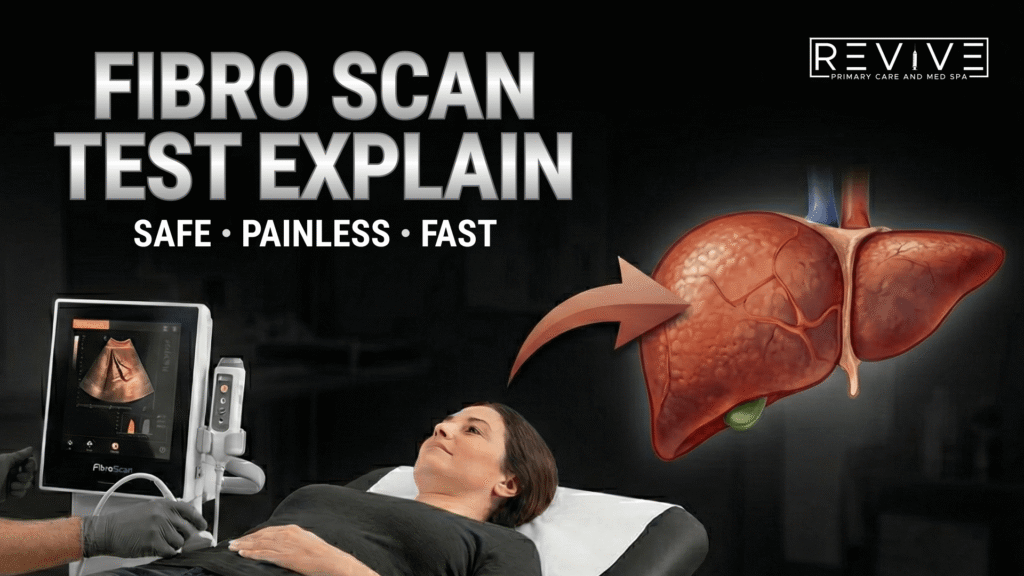
Your liver plays a critical role in digestion, metabolism, and detoxification, yet liver issues often develop silently. Many people do not realize there is a problem until damage has already progressed. The FibroScan liver test at Revive allows providers to evaluate liver health early, before symptoms appear or conditions worsen. A FibroScan can detect fatty liver disease and early liver scarring, often before symptoms appear.
This quick, non-invasive test supports a more proactive and personalized approach to preventive care.

Why Liver Health Is Often Overlooked
The liver is resilient and compensates well, even when under stress. Because of this, liver conditions such as fatty liver disease or early scarring may not cause noticeable symptoms at first.
Many patients feel completely fine while changes are already occurring internally. That is why testing matters.
What Is a FibroScan?
FibroScan is a non-invasive test that most patients tolerate comfortably. It measures:
- Fat buildup in the liver
- Liver stiffness, which may indicate scarring
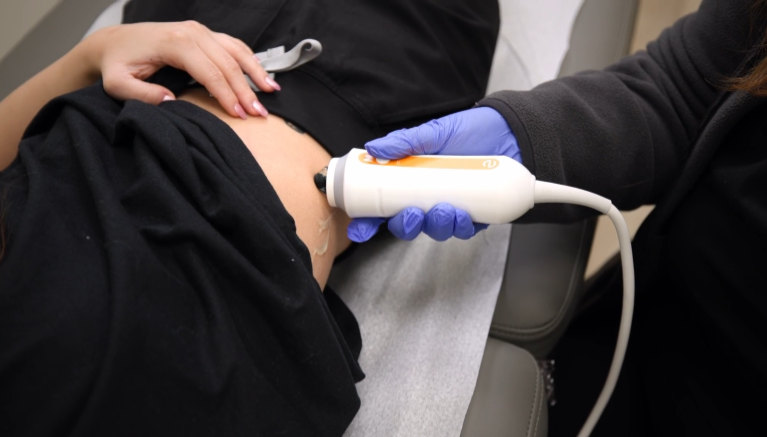
The test feels similar to an ultrasound and takes only 5 to 10 minutes. There are:
- No needles
- No bloodwork
- No downtime
Results are available right away, so you can discuss next steps at the same visit.
What Can a FibroScan Detect?
FibroScan may help identify liver changes early, including:
- Fatty liver disease
- Early liver scarring
- Changes related to metabolic health
This information allows providers to intervene early with lifestyle guidance, weight management support, or medical care when appropriate.
Who Should Consider a FibroScan?
FibroScan is especially helpful for patients who:
- Have elevated liver enzymes
- Have been diagnosed with fatty liver
- Are managing diabetes or insulin resistance
- Have high cholesterol
- Are working on weight management
- Want a clearer picture of their overall health
Even without symptoms, FibroScan can provide valuable insight into how the liver is functioning.
How FibroScan Supports Preventive Care
Preventive care is about identifying issues early and tracking changes over time. FibroScan allows providers to:
- Establish a baseline for liver health
- Monitor improvement or progression
- Guide personalized treatment recommendations
- Support long-term metabolic and liver health
This data-driven approach helps avoid guesswork and supports smarter health decisions.
A More Proactive Way to Care for Your Health
At Revive Primary Care & Med Spa, FibroScan technology supports a forward-thinking approach to care. By identifying liver changes early, providers can help patients protect their health before problems become more complex.
Know Your Liver Health Before Symptoms Appear
Liver health affects energy, metabolism, and overall wellness. A simple scan can give you and your provider a clear starting point.
Ask if FibroScan is right for you. Book a preventive liver health visit online at the Revive clinic nearest you, or call a clinic with any questions.
To learn more about related care at Revive, explore our laboratory and diagnostic testing, routine checkups and physical exams, and primary care services.
Related reading: health issues that can show up on labs before symptoms and what a routine checkup includes beyond vitals.
Frequently Asked Questions
What can a FibroScan detect?
A FibroScan looks for fat buildup and scarring, called fibrosis, in the liver. Cleveland Clinic notes that this imaging test estimates the amount of fat and fibrosis in your liver. The NIDDK explains that routine imaging can show liver fat but not fibrosis, and that increased liver stiffness may be a sign of fibrosis.
Can a FibroScan detect liver cancer?
No, a FibroScan is not used to diagnose liver cancer. It estimates fat and scarring in the liver. According to the National Cancer Institute, tests used to find liver cancer include a blood test for the AFP tumor marker, imaging such as ultrasound, CT or MRI, and a biopsy. Ask your provider if you have concerns about liver cancer.
Do I need to fast before a FibroScan?
You may need to, so ask your provider whether to fast and for how long. Cleveland Clinic advises against eating or drinking anything high in sugar before the test, because sugary products can affect liver stiffness. It also suggests wearing loose clothing and leaving your jewelry and accessories at home.
Does a FibroScan hurt or have side effects?
No, a FibroScan should not hurt. Cleveland Clinic describes ultrasound elastography as painless and noninvasive, with no known risks. A handheld wand is moved over your skin with a water based gel and sends painless, low frequency vibrations into the body. The test takes only a few minutes, and there are no needles.
What do FibroScan results mean?
FibroScan results show how stiff your liver is, and more stiffness points to more scarring. Cleveland Clinic groups scarring into stages: F0 to F1 means none or mild, F2 is moderate, F3 is severe and F4 is advanced scarring, also called cirrhosis. Your provider will review your result with you and explain whether more testing is needed.
Who should consider a FibroScan?
A FibroScan is worth asking about if you have risk factors for fatty liver disease. The NIDDK lists overweight or obesity, insulin resistance or type 2 diabetes, high triglycerides, abnormal cholesterol and traits of metabolic syndrome such as high blood pressure. Because the NIDDK calls this a silent disease with few or no symptoms, testing can help even when you feel fine.
Can a FibroScan replace a liver biopsy?
Not always. A FibroScan estimates scarring from outside your body, while a biopsy examines a small sample of liver tissue. The NIDDK explains that a liver biopsy is the only test that can prove a diagnosis of NASH, also called MASH, and can show fibrosis at earlier stages than elastography. Doctors do not recommend a biopsy for everyone.
Still have questions?
Call your clinic and our team will help you find the right visit.
This article is for general informational purposes only and is not medical advice. It does not create a patient-provider relationship. Individual results and health needs vary, so please consult a qualified clinician about your own symptoms, diagnosis, or treatment options.