
Living with allergy symptoms can feel exhausting. Sneezing, congestion, itchy eyes, skin irritation, or lingering sinus issues often become something people push through, especially when over-the-counter medications only offer temporary relief.
Allergy testing at Revive helps identify what is actually triggering your symptoms, so your provider can build a treatment plan around your own triggers.

Why Allergy Symptoms Keep Coming Back
Many allergy treatments focus on managing symptoms, not identifying causes. Without knowing your specific triggers, relief is often short-lived.
Common allergy triggers include:
- Environmental allergens
- Seasonal pollen
- Dust or mold exposure
- Pet dander
- Certain foods or skin irritants
Testing allows providers to move beyond guessing and build a plan based on real data.
What Allergy Testing Checks For
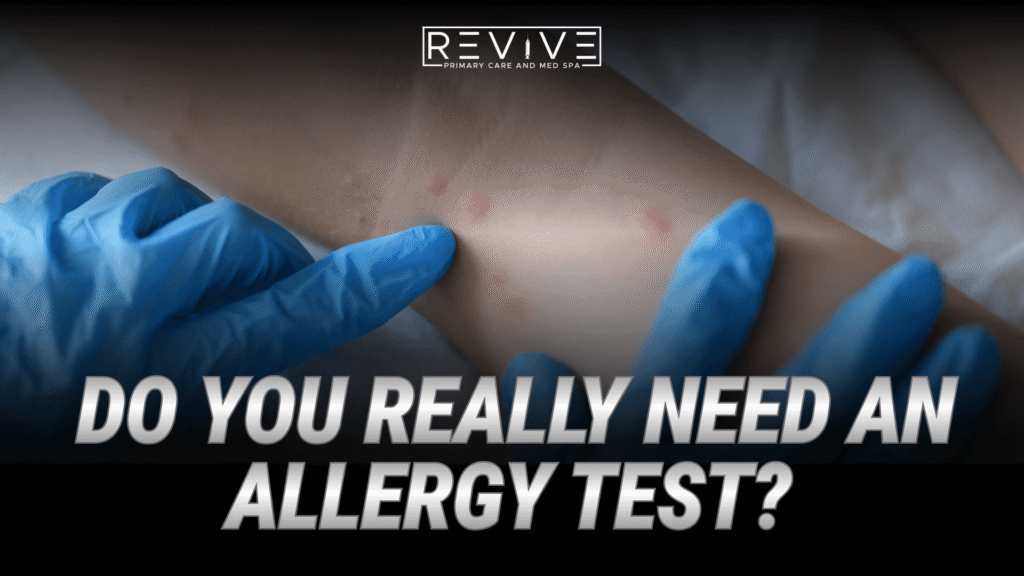
Allergy testing is designed to pinpoint what your immune system is reacting to. The process is quick and straightforward, helping identify triggers that may be contributing to:
- Chronic sneezing or congestion
- Itchy, watery eyes
- Skin irritation or rashes
- Ongoing sinus pressure
- Allergy symptoms that never fully resolve
Knowing your triggers is the first step. It gives you and your provider something specific to plan around.
Personalized Treatment for Long-Term Relief
Once your triggers are identified, your provider can tailor a treatment plan to them, and not just to the symptoms you feel today.
This may include:
- Immunotherapy when appropriate
- Lifestyle and environmental guidance
- Ongoing monitoring and adjustments
The goal is fewer symptoms and better quality of life over time.
Simple, Accessible Care
Allergy testing is quick and designed to fit into busy schedules. Most insurance plans are accepted.
At Revive Primary Care & Med Spa, allergy care is personalized, efficient, and built around your results.
Allergies, a Cold, or a Sinus Problem?
Allergy symptoms can look a lot like a lingering cold or a sinus infection, which is one reason they are easy to misread. A few general patterns can help you and your clinician sort them out:
- Symptoms that return around the same time each year, or flare when you are outdoors, around pets, or in dusty rooms, may point toward an allergic trigger.
- Clear, watery drainage along with itchy eyes or an itchy nose is often associated with allergies.
- Fever, body aches, or symptoms that start suddenly and fade within a week or two are more typical of a cold or another infection.
- Facial pain, thick discolored drainage, or symptoms that get worse after seeming to improve deserve a closer look by a clinician.
These are general patterns, not a diagnosis. Overlap is common, and a provider can help you understand what fits your situation.
When It Makes Sense to Talk to a Clinician
Many people live with symptoms for years before asking about testing. It may be worth scheduling a visit if:
- Over-the-counter options no longer seem to help, or you rely on them most days of the year
- Symptoms are affecting your sleep, work, exercise, or time outdoors
- Sinus pressure or congestion keeps coming back
- You notice rashes or itching and are not sure what is causing them
- You are planning a change at home, such as adopting a pet, and want to understand your sensitivities first
If you ever have trouble breathing, swelling of the lips, tongue, or throat, or feel faint after an exposure, call 911 or go to the nearest emergency room. Those symptoms need emergency care, not a scheduled appointment.
How to Prepare for Your Allergy Testing Visit
A little preparation helps your visit go smoothly and gives your provider a clearer picture of what is going on.
- Make a list of the medications and supplements you take, including allergy pills, nasal sprays, and eye drops. Some medications can affect skin testing, so ask the clinic whether you should pause anything beforehand, and never stop a prescription without your clinician’s guidance.
- Note when your symptoms are worst, such as certain seasons, times of day, or places.
- Write down what you have already tried and how well it worked.
- Wear clothing that makes the testing area easy to reach.
Your provider will explain how the test is done and when you will review the results together. For a step by step look at the appointment itself, see our guide on how long environmental allergy tests take.
Questions to Ask About Your Results
- Which triggers showed up, and how strong was each reaction?
- Do the results match the symptoms and seasons I have noticed?
- What changes at home or work might reduce my exposure?
- Should I consider immunotherapy, and what kind of commitment does it involve?
- When should we follow up, and what should prompt me to call sooner?
Results are most useful when they are interpreted alongside your history, so keep the conversation going if something does not seem to fit.
Allergy Care Close to Home
Revive has clinics in Frisco, McKinney, Highland Park, Highland Village, and Colleyville, plus a Lutz location serving North Tampa. Services can vary by location, so check your nearest clinic’s page or call a clinic to confirm that allergy testing is available there. You can also see every clinic on our locations page.
Stop Guessing What’s Causing Your Symptoms
You do not have to keep guessing or rely on temporary fixes. Knowing your triggers is the first step.
Book your allergy testing visit online, or call a clinic to confirm testing is offered at the location nearest you.
To learn more about related care at Revive, explore our acute illness care, medication management services, and routine checkups and physical exams.
Frequently Asked Questions
How can I stop sneezing from allergies?
Start by avoiding the pollen that triggers your sneezing, which MedlinePlus calls the best treatment for hay fever. It also lists saline nasal rinses, antihistamines and nasal corticosteroid sprays, and calls those sprays the most effective treatment for allergic rhinitis. Keeping windows closed at night and while driving can also limit pollen exposure.
What causes itchy eyes and sneezing at the same time?
Itchy eyes with sneezing are common signs of allergic rhinitis, often called hay fever, which happens when your body reacts to an allergen such as tree, grass or ragweed pollen. MedlinePlus lists itching of the nose, eyes and throat, a runny nose, sneezing and watery eyes as symptoms that appear soon after exposure.
How do I know if it is allergies or a cold?
Itchy, watery eyes that come back with the seasons or around certain triggers suggest allergies, while a low grade fever and mild body aches suggest a cold. MedlinePlus lists itchy eyes and nose among hay fever symptoms, and the CDC lists fever and mild body aches among cold symptoms and notes that colds usually last less than a week.
How long does an allergy skin test take?
Skin prick test results are usually seen within 15 to 20 minutes, according to MedlinePlus. Blood tests take longer because the sample is drawn and tested separately, and the American Academy of Allergy, Asthma and Immunology notes that blood test results are not available as quickly as skin test results.
Does allergy testing hurt?
Most people feel very little. MedlinePlus says skin tests may cause very mild discomfort when the skin is pricked, and a positive spot can turn red, itchy and swollen like a bug bite. The American Academy of Allergy, Asthma and Immunology describes skin testing as the most common type and relatively painless.
Is a blood test or skin test better for allergies?
Skin testing is usually the first choice. The American College of Allergy, Asthma and Immunology calls it the preferred method and usually the most accurate. MedlinePlus explains that a blood test, which measures IgE antibodies, may be used instead if you have certain skin conditions, take medicines that affect skin results, or are a young child.
Do I need to stop antihistamines before an allergy test?
Often yes, for skin testing. MedlinePlus notes that prescription and over the counter antihistamines can change skin test results, and the American College of Allergy, Asthma and Immunology advises avoiding them for 3 to 7 days beforehand and says medicine does not interfere with blood test results. Never stop a medicine unless your provider tells you to.
Does a positive allergy test mean I am allergic?
Not always. A positive skin test shows a red, raised bump called a wheal, but MedlinePlus notes that people can react on a test and still have no problems with that substance in daily life, especially with food testing. That is why results are read alongside your symptoms and history.
Still have questions?
Call your clinic and our team will help you find the right visit.
This article is for general informational purposes only and is not medical advice. It does not create a patient-provider relationship. Individual results and health needs vary, so please consult a qualified clinician about your own symptoms, diagnosis, or treatment options.